
Punjab to Distribute 30000 Laptops Under Phase 2
The Punjab Government has officially started preparations for Phase 2 of the Chief Minister Laptop Scheme 2026, bringing great news for university students across the province. Punjab Education Minister Rana Sikandar Hayat has confirmed that the first batch of 30,000 laptops has already arrived in Punjab. This initiative is part of Chief Minister Maryam Nawaz Sharif’s vision to promote digital education and help deserving students continue their studies with modern technology. According to the latest announcement, more than 70,000 laptops will be distributed to eligible students during the current year. The scheme is expected to benefit students studying in public sector universities and colleges throughout Punjab.
Quick Information Table for Punjab to Distribute 30000 Laptops Under Phase 2
| Details | Information |
|---|---|
| Program Name | Chief Minister Punjab Laptop Scheme Phase 2 |
| Announcement Date | June 2026 |
| Applications Start Date | To Be Announced (Official Schedule Expected Soon) |
| Last Date to Apply | To Be Announced |
| Bank Name | Not Applicable |
| Total Assistance | Free Laptop |
| Laptop Quantity (Phase 2) | 30,000 Laptops |
| Total Laptops in 2026 | More than 70,000 |
| Return Time | No Return Required |
| Province | Punjab |
| Eligible Cities | All districts and cities of Punjab |
| Application Method | Expected Online / Through Educational Institutions (Official Confirmation Awaited) |
| Target Beneficiaries | Students of Public Universities and Colleges |
Punjab Laptop Scheme Phase 2 Latest Update
Punjab Education Minister Rana Sikandar Hayat has officially announced that the first shipment of 30,000 laptops has reached Punjab. These laptops will soon be distributed among eligible students under the second phase of the Chief Minister Laptop Scheme.
The Punjab Government has also confirmed that more than 70,000 laptops will be distributed during 2026. The objective of the scheme is to improve digital learning opportunities and provide deserving students with modern educational resources.
Students are advised to stay connected with their universities and the Higher Education Department for the official distribution schedule and eligibility verification process.
Purpose of the Punjab to Distribute 30000 Laptops Under Phase 2
The main goal of the scheme is to support talented and hardworking students by providing them with laptops free of cost. The government wants students to benefit from:
Better Online Learning
Students can attend online classes, access digital libraries, complete assignments, and improve their research skills.
Digital Skills Development
The laptop scheme encourages students to learn modern computer skills, programming, freelancing, graphic designing, artificial intelligence, and other digital fields.
Equal Educational Opportunities
Many deserving students cannot afford laptops. This scheme helps reduce the technology gap and gives every deserving student an equal opportunity to succeed.
Who Will Be Eligible?
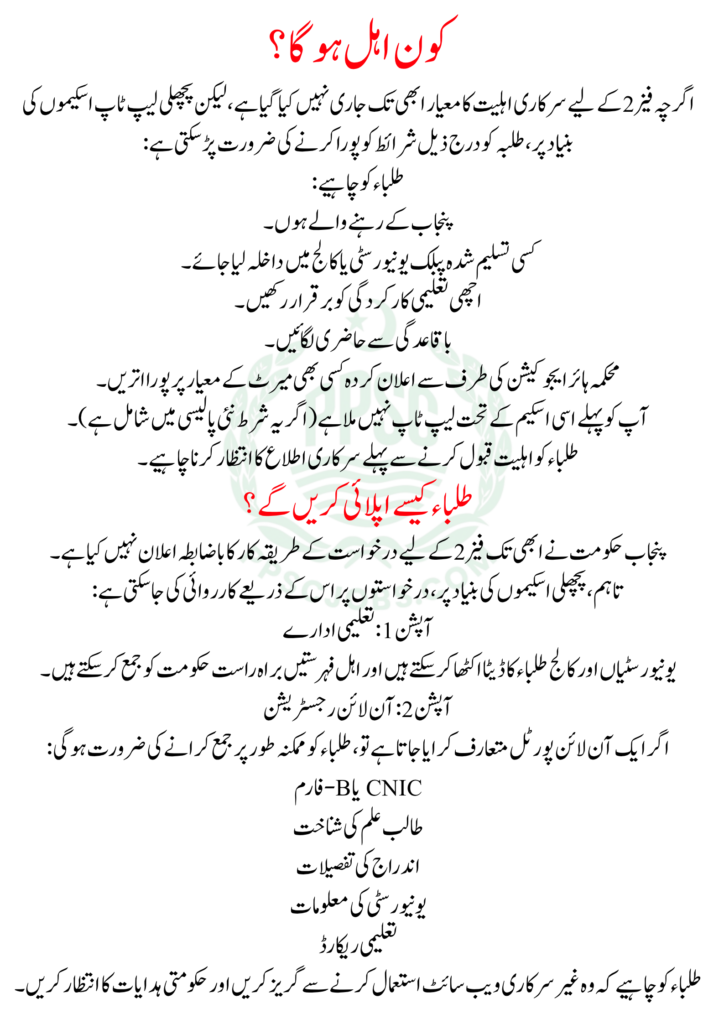
Although the official eligibility criteria forPunjab to Distribute 30000 Laptops Under Phase 2 have not yet been released, based on previous laptop schemes, students may need to meet the following conditions:
Students Must:
- Be residents of Punjab.
- Be enrolled in a recognized public university or college.
- Maintain good academic performance.
- Have regular attendance.
- Meet any merit criteria announced by the Higher Education Department.
- Not have received a laptop under the same scheme previously (if this condition is included in the new policy).
Students should wait for the official notification before assuming eligibility.
How Will Students Apply?
The Punjab Government has not yet announced the official application procedure for Phase 2.
However, based on previous schemes, applications may be processed through:
Option 1: Educational Institutions
Universities and colleges may collect student data and submit eligible lists directly to the government.
Option 2: Online Registration
If an online portal is introduced, students will likely be required to submit:
- CNIC or B-Form
- Student ID
- Enrollment details
- University information
- Academic record
Students should avoid using unofficial websites and wait for government instructions.
Distribution Process
The government has confirmed that the laptops have already reached Punjab.
The expected distribution process may include:
- Verification of eligible students.
- Preparation of merit lists.
- Approval by the Higher Education Department.
- Distribution ceremonies at universities and colleges.
- Students receiving laptops after identity verification.
The official distribution schedule will be announced soon.
Punjab Education Budget 2026-27
The Punjab to Distribute 30000 Laptops Under Phase 2 is part of Punjab’s historic investment in education.
The Punjab Government has allocated approximately Rs. 750 billion for the education sector in the 2026-27 Budget.
This budget aims to:
- Improve schools and colleges.
- Strengthen universities.
- Promote digital education.
- Upgrade educational infrastructure.
- Support deserving students.
- Increase access to quality education.
School Education Department Allocation
According to the budget documents:
- Rs. 600.78 billion has been allocated for current expenditures.
- Rs. 13.18 billion has been allocated for development projects.
- Rs. 570.52 billion has been reserved as grants and subsidies for district education authorities and public schools.
This funding will help improve educational facilities across Punjab.
Higher Education Department Budget
The Higher Education Department has also received significant funding.
The allocation includes:
- Rs. 83.48 billion for current expenditures.
- Rs. 11.15 billion for development projects.
- Rs. 68.72 billion for salaries and employee-related expenses.
These funds will strengthen universities and improve higher education throughout Punjab.
Benefits of Receiving a Laptop
Students selected under the scheme will enjoy several benefits:
Improved Academic Performance
Laptops help students complete assignments, prepare presentations, and conduct research more efficiently.
Access to Online Courses
Students can enroll in international learning platforms and improve their professional skills.
Freelancing Opportunities
A personal laptop enables students to learn freelancing, content writing, graphic design, video editing, programming, and other online earning skills.
Better Career Preparation
Digital literacy is becoming essential in every profession. A laptop helps students prepare for future job opportunities.
Important Instructions for Students
Students should keep the following points in mind:
- Stay connected with your university administration.
- Keep your academic record updated.
- Ensure your student information is correct.
- Follow only official government announcements.
- Avoid fake social media posts regarding registration.
- Wait for the official merit list and application instructions.
Expected Timeline
While the government has confirmed that laptops have arrived, the following announcements are still awaited:
- Official registration schedule.
- Eligibility criteria.
- Merit calculation method.
- Distribution dates.
- University-wise allocation.
- Online registration portal (if introduced).
Students should regularly check official announcements for these updates.
Final Words
The Punjab to Distribute 30000 Laptops Under Phase 2 is another major initiative aimed at supporting students through digital education. With 30,000 laptops already delivered to Punjab and more than 70,000 laptops planned for distribution during 2026, thousands of deserving students will soon benefit from this program. Alongside the record Rs. 750 billion education budget, the Punjab Government is investing heavily in improving schools, colleges, universities, and digital learning opportunities. Students should wait for the official registration announcement, follow updates from their educational institutions, and rely only on verified government information to avoid misinformation.